
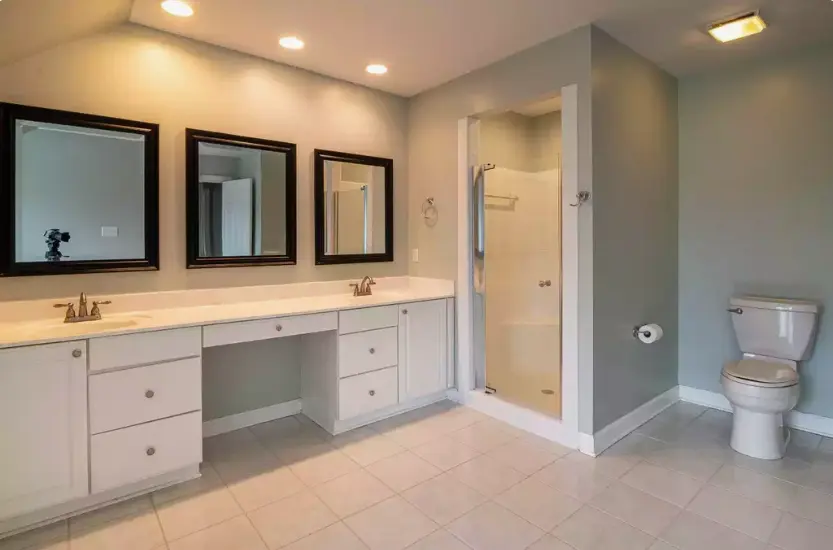
Installing a new bathroom cabinet or vanity can improve storage, update the appearance of your bathroom, and make everyday routines more convenient. However, before starting a bathroom renovation, it is important to understand the cost of the cabinet, professional installation, plumbing work, and any additional repairs.
Bathroom cabinet installation typically costs between $300 and $3,800 for materials and labor, with an estimated average of around $1,500 for a standard project. More expensive installations involving semi-custom or fully custom cabinetry, premium countertops, plumbing relocation, or structural modifications can cost considerably more.
The final price depends on the cabinet’s size and material, the complexity of the installation, and the condition of your existing bathroom. This guide explains bathroom cabinet installation costs, professional labor rates, additional expenses, and ways to plan your project budget.
What Is the Average Cost to Install a Bathroom Cabinet?
For a straightforward bathroom cabinet or vanity replacement, the total cost generally includes the cabinet, necessary hardware, and installation labor. Additional expenses may apply if you need a new sink, countertop, faucet, plumbing connections, or repairs.
The following estimates provide a starting point for budgeting.
| Installation expense | Estimated cost |
|---|---|
| Basic bathroom vanity installation, including materials | $300–$900 |
| Mid-range vanity installation, including materials | $900–$2,500 |
| Typical bathroom cabinet or vanity project | $300–$3,800 |
| Average project estimate | Around $1,500 |
| Basic professional installation labor only | $150–$700 |
These are approximate U.S. cost ranges, not guaranteed quotes. The average of $1,500 is a general budgeting reference rather than a price that every homeowner should expect to pay.
A simple replacement that uses the existing plumbing and requires little preparation may cost less than a project involving a large cabinet, premium countertop, or extensive installation work. High-end custom cabinetry can exceed the typical project range.
When comparing estimates, check whether the quoted price includes the cabinet, countertop, sink, faucet, removal of the old unit, plumbing connections, and finishing work. Two quotes may look different simply because they cover different services.
Bathroom Cabinet Installation Cost by Cabinet Type
The cabinet style and construction have a significant impact on the total installation cost. Ready-made units are generally less expensive than cabinetry built to fit a particular bathroom.
The following ranges are indicative estimates for materials and installation labor.
| Cabinet type | Estimated installed cost | Common applications |
|---|---|---|
| Stock or ready-to-assemble (RTA) | $300–$900 | Small bathrooms, powder rooms, budget projects |
| Mid-range prefabricated | $900–$2,500 | Standard guest and primary bathrooms |
| Semi-custom cabinetry | $2,500–$5,000 | Design-focused renovations and modified sizing |
| Fully custom cabinetry | $5,000–$20,000+ | Luxury bathrooms and specialized layouts |
These categories overlap because cabinet size, countertop selection, installation complexity, and regional labor costs vary. The upper ranges for custom cabinets may also include additional fabrication or finishing work, so confirm what each estimate covers.
Stock and ready-to-assemble bathroom cabinets
Stock cabinets are manufactured in standard sizes and finishes. Ready-to-assemble cabinets typically arrive as components that need to be assembled before installation.
These options can be appropriate when you want to replace an existing vanity without changing the bathroom layout. Standard dimensions and readily available components may reduce fabrication time and simplify installation.
However, check the quality of the cabinet construction, drawer hardware, finish, and moisture resistance before purchasing. A low purchase price does not necessarily mean the entire project will be inexpensive if assembly, plumbing adjustments, or additional hardware are required.
Mid-range prefabricated bathroom vanities
Mid-range vanities offer a wider selection of cabinet finishes, storage arrangements, countertop materials, and sink configurations.
They can suit homeowners updating a primary bathroom or guest bathroom without commissioning fully custom cabinetry. Depending on the product, the vanity may include a countertop and sink or require those items to be purchased separately.
Compare the complete installed price rather than the cabinet’s advertised price alone.
Semi-custom bathroom cabinets
Semi-custom cabinets provide more flexibility in dimensions, storage layouts, finishes, and hardware than standard stock products. They may be useful when a bathroom has an unusual layout or requires specific storage arrangements.
The additional choices can increase material costs and lead times. Installation may also require more precise fitting, especially when the cabinet must align with existing walls, tile, or plumbing.
Fully custom bathroom cabinetry
Custom cabinets are built to suit a particular space and design. They can accommodate unusual dimensions, specialized storage, integrated features, and premium materials.
The price depends on the cabinet’s size, construction, finish, hardware, fabrication requirements, and installation complexity. Custom cabinetry may be appropriate for high-end renovations, but it is important to establish the scope and budget before production begins.
Bathroom Cabinet Installation Cost per Linear Foot
Some cabinet estimates are calculated using linear feet, particularly when comparing cabinetry across a wider bathroom or a multi-unit installation.
Approximate material and installation costs may fall within these ranges:
| Cabinet category | Estimated cost per linear foot |
|---|---|
| Stock or prefabricated cabinets | $100–$300 |
| Fully custom cabinets | $500–$1,200 |
A linear foot measures 12 inches of cabinet length. However, these estimates should not be treated as a universal pricing formula. Cabinet height, depth, materials, countertop selection, and the amount of installation work can all affect the final price.
For example, a longer vanity may require more cabinet material and countertop space, while a small cabinet with complex fittings may require more labor per foot than a straightforward installation.
Ask the contractor whether the estimate includes only the cabinet or also covers the countertop, sink, hardware, delivery, and installation.
Bathroom Cabinet Installation Labor Cost
Professional installation labor is separate from the price of the cabinet when a contractor provides an itemized estimate. The labor charge depends on the installer, project duration, cabinet design, and work required.
For a basic bathroom vanity replacement, professional installation labor may range from approximately $150 to $700. Projects involving cabinet assembly, heavy countertops, plumbing modifications, or structural preparation can cost more.
Handyman installation rates
Handymen may charge approximately $50–$150 per hour, depending on the local market and the work involved.
A handyman may be suitable for a straightforward replacement when the cabinet fits the existing space, the plumbing remains in place, and no specialized modifications are required.
Before hiring someone, confirm that the installer has experience with cabinet mounting, vanity tops, and the specific work included in your project. Plumbing or electrical work may require a properly licensed professional under local regulations.
Licensed plumber rates
Plumbers may charge approximately $45–$150 per hour, depending on location, experience, and the nature of the job.
A plumber may be necessary when changing from a single sink to a double sink, relocating supply lines, modifying the drain, replacing faulty shutoff valves, or correcting existing plumbing problems.
The total plumbing charge depends on how accessible the pipes are and whether the work involves opening walls or modifying drainage connections. Ask whether the estimate includes materials, testing, and any required permits.
Cabinet installer and specialist rates
Cabinet specialists may charge a daily rate of approximately $500–$1,250 or use per-unit pricing for particular installation tasks. Some complex cabinet assemblies may have starting labor charges of around $150–$250 per cabinet.
These figures are broad estimates rather than standardized industry rates. A specialist’s quote may include assembly, leveling, fastening, hardware adjustments, and fitting the cabinet to the surrounding surfaces.
Clarify whether the specialist will also install the countertop and sink or whether those tasks require separate trades.
Additional Costs That Can Increase Your Budget
The cabinet itself is only one part of the total project cost. Removal, plumbing, wall preparation, and finishing work can add significantly to the final bill.
1. Removing the old bathroom cabinet
Removing an existing vanity may cost approximately $115–$500 when labor, hauling, and disposal are included.
The price depends on the cabinet’s size, weight, attachment method, and accessibility. A small cabinet that can be removed easily may cost less to remove than a large vanity with a heavy stone countertop.
Ask whether the quote includes disposal. If the cabinet can be reused or donated, confirm whether removal and transportation can be handled separately.
2. Plumbing modifications
Keeping the existing supply lines and drain in place can help limit additional plumbing costs.
If the new cabinet has a different sink configuration or plumbing layout, modifications may cost approximately $400–$2,200. The actual price depends on the number of connections, pipe locations, accessibility, and extent of the work.
Switching from a single-sink vanity to a double-sink vanity may require additional supply lines, drain connections, and other changes. Relocating pipes inside a wall can also involve wall repairs and finishing work.
Choose the vanity layout before plumbing work begins to reduce the risk of unnecessary changes.
3. Floating vanity wall reinforcement
Floating bathroom vanities attach to the wall rather than resting directly on the floor. They can create an open appearance and make floor cleaning easier, but they require appropriate structural support.
If the wall needs to be opened to install structural blocking or reinforcement, additional labor and materials may cost approximately $600–$2,000.
This is not a required expense for every floating vanity. The cost depends on the existing wall construction, the manufacturer’s mounting system, and whether suitable support is already in place.
A floating vanity must be secured according to its load requirements. Ordinary drywall anchors should not be treated as a substitute for the structural support required by the product.
4. Flooring and baseboard repairs
Replacing a vanity with a smaller cabinet can expose unfinished flooring or sections of the wall that were previously concealed.
Flooring patches, replacement baseboards, and related finishing work may add approximately $500–$1,000 when substantial repairs are necessary. Minor repairs may cost less.
Inspect the area beneath the old vanity before choosing a replacement size. Keeping a similar cabinet footprint may reduce the amount of additional flooring or trim work required.
5. Countertop and sink installation
Some bathroom vanities include an integrated sink and countertop, while others require separate components.
A separate countertop or sink may increase the material and labor costs. Heavy stone countertops can require additional handling, precise fitting, and specialized installation hardware.
Before purchasing, confirm that the sink, faucet, drain assembly, countertop, and cabinet are compatible. Also ask whether the contractor’s estimate includes installation of all these components.
6. Wall repairs and painting
Removing the existing vanity may expose holes, damaged drywall, old adhesive, or areas of unfinished paint.
Small repairs may be relatively inexpensive, but larger sections of damaged wall may need patching, sanding, priming, and repainting.
If the new cabinet is a different size or height, inspect the surrounding wall before finalizing the budget.
7. Delivery, assembly, and hardware
Large vanities may incur delivery charges, particularly when they are heavy or require special handling. Ready-to-assemble cabinets may also need additional labor for assembly.
Handles, drawer pulls, soft-close hinges, mounting brackets, and other accessories can add to the material cost.
Check the product specifications to see which items are included in the purchase price.
8. Water damage and unexpected repairs
An old vanity can conceal leaking pipes, swollen cabinet supports, damaged flooring, or deteriorated wall materials.
Repairing these problems before installation may increase the project cost, but covering them with a new cabinet can lead to further damage.
If the existing vanity shows signs of persistent moisture, investigate the cause before proceeding. Extensive damage or suspected mold may require professional assessment and remediation.
Example Bathroom Cabinet Installation Budgets
The following examples illustrate how project costs can vary. They are hypothetical budgeting examples, not contractor quotes or guaranteed prices.
| Project type | Example budget | Typical scope |
|---|---|---|
| Basic vanity replacement | $500–$900 | Stock cabinet, straightforward installation, existing plumbing |
| Mid-range vanity upgrade | $1,200–$2,500 | Prefabricated vanity, countertop, sink, and standard installation |
| More involved vanity renovation | $2,500–$5,000+ | Semi-custom cabinet, additional finishing, or plumbing changes |
| High-end custom installation | $5,000–$20,000+ | Custom cabinetry, premium components, and more complex work |
The ranges overlap because each bathroom has different requirements. A basic vanity can cost more if the old unit is difficult to remove, while a mid-range product may require relatively little labor if it fits the existing space.
Example: A straightforward vanity replacement
Suppose you select a standard vanity, keep the existing plumbing locations, and do not need major wall or flooring repairs. Your budget would primarily cover the cabinet, installation labor, necessary connections, and minor finishing.
This type of project is generally simpler than changing the bathroom layout or installing a custom cabinet.
Example: A double-sink vanity upgrade
A double-sink vanity may require a larger cabinet, more countertop space, additional faucet and drain components, and plumbing modifications.
If the new configuration requires structural changes or additional wall and floor repairs, the project may move beyond the typical installation budget.
Obtaining a detailed quote before ordering the vanity can help you understand the full cost.
How to Save Money on Bathroom Cabinet Installation
You do not necessarily need custom cabinetry or a complete bathroom renovation to improve your storage and appearance. Several planning decisions may help control the overall cost.
Keep the existing plumbing layout
Choosing a vanity that works with the existing water supply and drain locations may reduce plumbing labor and material expenses.
Confirm the measurements before purchasing the cabinet rather than assuming that the connections will align.
Compare complete installed prices
Compare at least a few detailed estimates when possible. Make sure each one covers the same items, such as cabinet materials, assembly, installation, plumbing connections, old cabinet removal, and finishing.
A low initial quote may exclude tasks that another contractor has already included.
Consider stock or prefabricated cabinets
Standard-size cabinets can be a practical option when your bathroom layout does not require specialized dimensions.
Compare construction quality, moisture resistance, storage configuration, and warranty terms alongside the purchase price.
Avoid unnecessary layout changes
Keeping the vanity in its existing location may reduce plumbing modifications and related wall repairs.
If you are planning a wider bathroom remodel, discuss the vanity layout early so the cabinetry, plumbing, flooring, and tile work can be coordinated.
Choose materials suited to the bathroom
A cabinet should be suitable for the humidity and cleaning conditions of the room. Consider the finish, edge protection, hardware, and manufacturer’s care instructions.
Selecting appropriate materials at the outset can help avoid premature replacement caused by preventable moisture damage.
Plan for removal and finishing work
Ask how the old vanity will be removed and what condition the wall and floor are expected to be in afterward.
Planning for potential repairs helps you avoid unexpected expenses when the new cabinet is ready to install.
Is Professional Bathroom Cabinet Installation Worth the Cost?
Professional installation may be useful when the vanity is heavy, the cabinet requires precise fitting, or the project includes plumbing changes and structural mounting.
An experienced installer can help position and level the cabinet, secure it properly, fit the countertop and sink, and check the finished installation. A plumber can address changes to the water supply or drainage system when needed.
DIY installation may be appropriate for someone with the necessary skills and tools who is replacing a straightforward vanity without changing the plumbing. However, mistakes involving mounting support, countertop handling, or water connections can result in damage and additional repair costs.
Consider the complexity of the work, your available time, and the consequences of a potential installation error before deciding how to proceed.
How to Get an Accurate Bathroom Cabinet Installation Estimate
A useful estimate should describe the complete scope of work instead of listing only the cabinet installation charge.
Before requesting a quote, prepare the following information:
- The width, depth, and height of the proposed vanity.
- Whether the cabinet is stock, prefabricated, semi-custom, or fully custom.
- Whether the sink and countertop are included.
- The condition and location of existing plumbing.
- Whether the old vanity needs to be removed and disposed of.
- Whether the wall or floor needs repairs.
- Whether the cabinet is freestanding or wall-mounted.
- Any special requirements for hardware, storage, or finishing.
Ask the contractor to identify material costs, labor charges, plumbing work, removal fees, and potential additional expenses separately. Also clarify how unexpected problems will be handled if damage is discovered after the old vanity is removed.
This approach makes it easier to compare estimates and decide which option fits your budget.
Frequently Asked Questions
What is the average cost to install a bathroom cabinet?
A typical bathroom cabinet or vanity installation may cost around $1,500, with a broad estimated range of $300–$3,800 for standard projects that include materials and labor. Custom cabinetry, premium components, and extensive modifications can cost more.
How much does labor cost to install a bathroom vanity?
Professional labor for a straightforward vanity replacement may range from approximately $150–$700. The actual charge depends on the cabinet, installation conditions, and work included. Plumbing changes, countertop installation, and structural modifications may require additional labor.
How much does it cost to replace an old bathroom vanity?
The cost depends on the replacement cabinet, removal and disposal of the old unit, and whether the existing plumbing and surrounding surfaces can remain in place. A simple replacement may fit within the lower end of the standard installation range, while a larger renovation can cost considerably more.
Is a floating bathroom vanity more expensive to install?
It can be. Floating vanities require appropriate wall support and mounting hardware. If structural reinforcement is needed, the additional preparation can increase the installation cost. The final price depends on the wall construction and the requirements of the selected cabinet.
Does bathroom cabinet installation include plumbing?
Not always. Some installation quotes cover only cabinet assembly, positioning, leveling, and fastening. Faucet installation, supply line connections, drain assembly, and plumbing modifications may be charged separately. Confirm these details before accepting an estimate.
Is custom bathroom cabinetry worth the additional cost?
Custom cabinetry may be useful when a bathroom has unusual dimensions, specialized storage needs, or a specific design requirement. Standard prefabricated cabinets may be sufficient when the existing layout accommodates an available size. Compare the benefits, total cost, and installation requirements before choosing.
What additional costs should I budget for?
Potential additional expenses include old vanity removal, plumbing changes, countertop and sink installation, wall repairs, flooring patches, structural reinforcement, delivery, assembly, and finishing. Not every project requires all these items.
Plan Your Bathroom Cabinet Installation With Joe’s Construction and Remodeling Inc
Choosing the right bathroom cabinet involves more than comparing product prices. Measurements, plumbing compatibility, installation requirements, and finishing work all influence the final budget.
Joe’s Construction and Remodeling Inc can be considered when planning a broader bathroom remodeling project. Before beginning, outline your preferred cabinet style, storage requirements, available space, and any planned changes to the sink, countertop, flooring, or surrounding walls.
A clear project scope helps you understand the work involved and compare installation estimates more effectively. Whether you are replacing an existing vanity or incorporating new cabinetry into a larger bathroom renovation, careful planning can help you make informed decisions about your project and budget.